If you wear dentures, or you have been told you are heading that way, you have probably already been given the short version: dentures are the affordable option, implants are the expensive one. That framing is common, and it is not very useful, because it skips the question that actually decides this for most people.
The real difference is not what sits in your mouth. It is what happens underneath it.
What each one actually is
A full denture is a removable prosthesis that rests on the gum. On the upper jaw it is held largely by suction against the palate. On the lower jaw there is far less to hold on to, which is why lower dentures are the ones patients complain about most.
Full-arch implant treatment replaces the whole arch with a fixed set of teeth anchored to implants placed in the jawbone. The implants act as roots. The teeth are attached to them and do not come out — you clean around them rather than taking them out at night.
There is also a middle option people are rarely told about: an implant-retained overdenture, which still comes out, but clips onto a small number of implants instead of relying on suction. It solves the stability problem without being full fixed treatment.
The part that decides it: bone
This is the piece that gets left out of most conversations, and it is the one that matters over ten years.
Bone is maintained by pressure. Every time you bite, your tooth roots transmit force into the jaw, and the bone responds by holding its density. Remove the roots and that signal stops. The jaw begins to resorb — thinning and shrinking, gradually, for as long as the roots are absent.
A denture sits on top of the gum. It does nothing to load the bone underneath, so resorption continues beneath it. This is why a denture that fit well when it was made needs relining or replacing later: the denture has not changed shape, the jaw has.
It is also why long-term denture wearers often notice their face changing — the lower third shortening, the chin coming forward, deeper lines around the mouth. That is not aging on its own. It is the bone that used to support the face gradually reducing.
Implants restore the loading. Because the posts are integrated into the bone, biting force is transmitted into the jaw again, and the bone in that area is maintained rather than lost.
That is the honest core of the comparison. A denture manages the problem. Implants address what is causing it.
Day to day
Eating. Most denture wearers adapt, but the adaptation involves a list of foods they no longer attempt — apples, corn, steak, crusty bread. Fixed implant teeth restore a large share of natural chewing force, and that list mostly goes away.
Speaking. An upper denture covers the palate, which affects some sounds and, for many people, taste and temperature. Fixed implant bridges generally leave the palate uncovered.
Confidence. The thing patients raise most often is not chewing. It is the low-level vigilance — not laughing fully, avoiding certain foods in company, the awareness that something could shift. Fixed teeth remove that, and it is usually the change people mention first.
Maintenance. Dentures come out for cleaning and soaking, and need periodic relines as the jaw changes. Implant teeth are brushed and cleaned around, like natural teeth, with professional maintenance visits. Neither is maintenance-free; they are different kinds of upkeep.
Cost, and the more useful way to look at it
Full-arch implant treatment costs more up front than a conventional denture. There is no point pretending otherwise.
The comparison that actually helps is cost over time. A denture is not a single purchase — it needs relining as the jaw resorbs, and replacing periodically. Those costs recur for as long as you wear it, and they arrive on the jaw’s schedule, not yours. Implant treatment is weighted heavily toward the beginning, with maintenance after that.
Which comes out ahead depends on your age, your bone, and how long you expect to be wearing whatever you choose. It is worth asking for both figures side by side over a ten- and twenty-year horizon rather than comparing two sticker prices.
One practical note on our end: we have a complete dental lab in the office, including milling. Both dentures and implant restorations are made here rather than sent out to an external laboratory. That means fewer appointments spent waiting on a lab, and fit and shade adjustments made with you in the chair instead of over a postal loop. Cherry financing is available if you would rather spread the cost, and it does not involve a hard credit check.
Who each option suits
A conventional denture is often the sensible choice when bone volume is very limited and grafting is not wanted, when general health makes surgery inadvisable, when the immediate budget is the deciding constraint, or as a well-made interim step while you plan something more permanent.
Full-arch implants tend to be the better fit when a lower denture will not stay put, when chewing has become genuinely limited, when you are younger and facing decades of bone loss, when the denture is affecting how you speak or how you feel in company, or when you would simply rather not have removable teeth.
An implant-retained overdenture sits between them, and it is worth asking about specifically. It is often overlooked because patients are presented with only the two ends of the range.
What treatment involves
It starts with a 3D cone-beam scan. That scan shows bone height, bone density, and the position of the sinuses and nerves — which is what determines whether implants can be placed directly, and how many. The number of implants and where they go is a planning decision based on your bone and your bite, not a fixed formula, and you should expect it explained to you before anything begins.
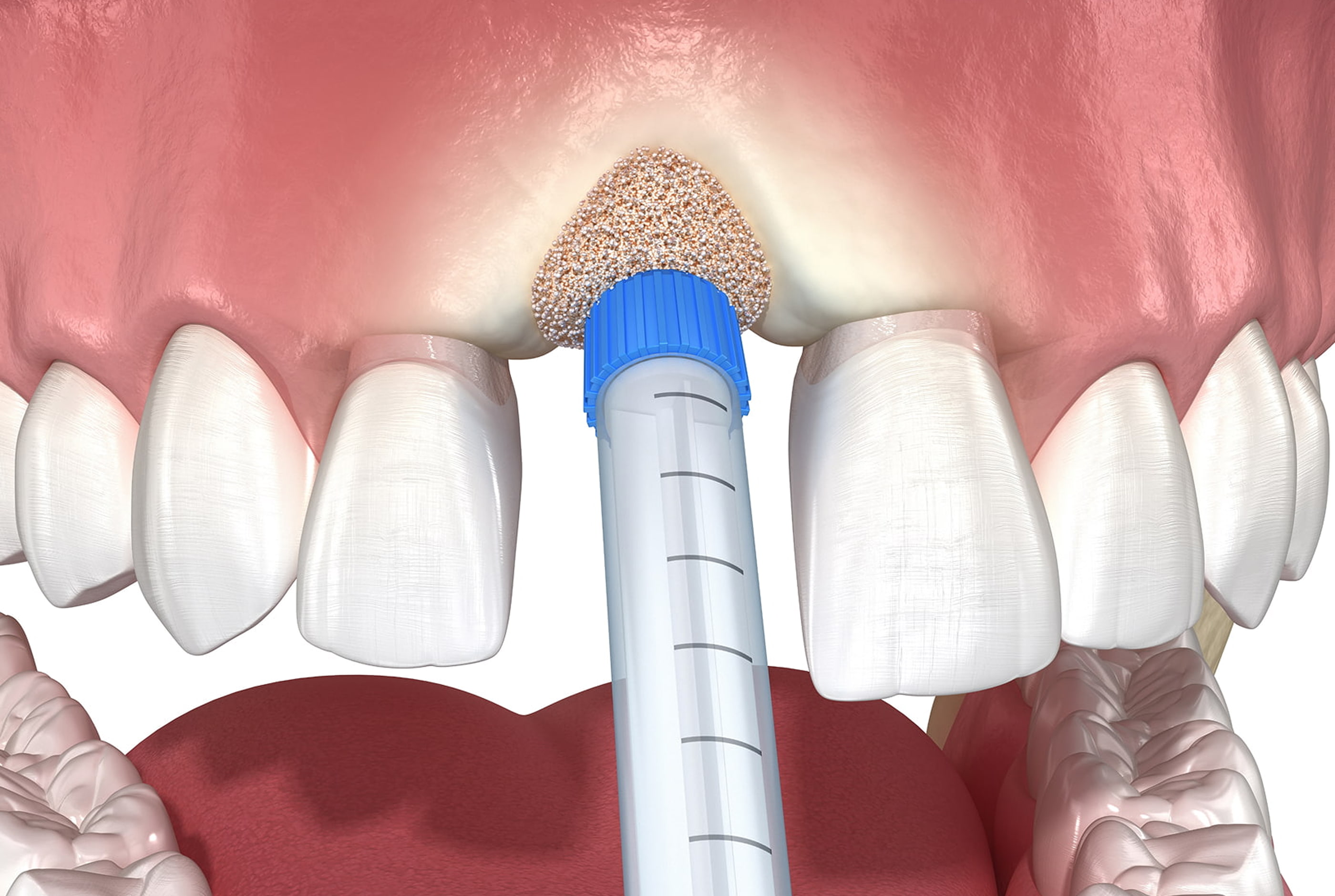
Where bone height is short in the upper back jaw, a sinus lift can rebuild it. Elsewhere, a bone graft may be needed first. Neither rules you out — they are common preparatory steps, and long-term denture wearers frequently need one.
Placement is done under local anesthetic. The implants then need months to integrate with the bone before final teeth are fitted. You are not without teeth during that time.
Common questions
I have worn dentures for years. Is it too late for implants? Usually not, though bone will have reduced in the meantime, which is exactly why the scan comes first. Grafting can often rebuild what is needed. Being told years ago that you had insufficient bone does not settle it today — the techniques have moved on considerably.
Can I start with a denture and switch to implants later? Yes, and many people do. The one thing worth knowing is that bone continues to resorb while you wear the denture, so a longer wait can mean more preparatory work later. It does not close the door; it can make the eventual route longer.
Do implant teeth feel like real teeth? Closer than a denture does, by a wide margin. They are fixed, they do not cover the palate, and biting force is much closer to natural. They are still a restoration, not a set of natural teeth — but patients rarely describe them as feeling like an appliance.
Is the surgery painful? Placement is done under local anesthetic, so you should not feel pain during it. Recovery is generally milder than people expect and is usually managed with over-the-counter pain relief for a few days. If dental treatment makes you anxious, sedation options can be discussed beforehand.
How long do implants last? The posts are designed to be permanent, and research consistently reports high survival rates over ten years and beyond. The teeth attached to them may eventually need refreshing, as any restoration might. Good cleaning and regular checkups matter more to longevity than anything else.
What if I only need one arch done? That is common — the lower jaw is the more frequent problem. Arches can be treated separately, and the plan for one does not commit you on the other.
Working out which one applies to you
This is not a decision that can be made from an article. It comes down to how much bone you have, what your bite is doing, your general health, and what you want from the next twenty years. One consultation and a scan answer all of it.
Pure Arts Dental Care
98-71 Queens Blvd, Rego Park, NY 11374 (on the Forest Hills border)
(718) 437-7777 · Monday–Friday, 9am–5pm
Request an appointment online
Related reading: full-arch implant treatment covers fixed replacement in detail, dentures and partial dentures covers the removable options, and our implant FAQs answer the questions patients ask most.
This article is for general educational purposes and isn’t a substitute for an examination and personalized advice from your dentist.

 Call Now