 (718) 437-7777
If you have been told you do not have enough bone for a dental implant in your upper jaw, a sinus lift is usually the reason the conversation is still open rather than closed. It is a well-established procedure that rebuilds bone height beneath the sinus so an implant has something solid to anchor into.It sounds more dramatic than it is. Here is what it actually involves, when it is needed, and what to expect at our Rego Park office.
What a sinus lift involves
Why upper back teeth are the problem area
Your maxillary sinuses are two air-filled spaces that sit directly above your upper back teeth, separated from the roots by a thin floor of bone. In some people that bone is naturally thin to begin with.
Then a tooth is lost. Two things happen at once. The bone that used to support the root begins to resorb, because nothing is stimulating it any more. And the sinus above slowly expands downward into the space the root left behind — a process called pneumatization.
Over a few years, the strip of bone between your mouth and your sinus can thin to a few millimetres. An implant needs considerably more than that to be stable. A sinus lift restores the height so the implant has bone to integrate with. This is why upper back molars and premolars so often need grafting while front teeth and lower teeth usually do not.
How we know whether you need one
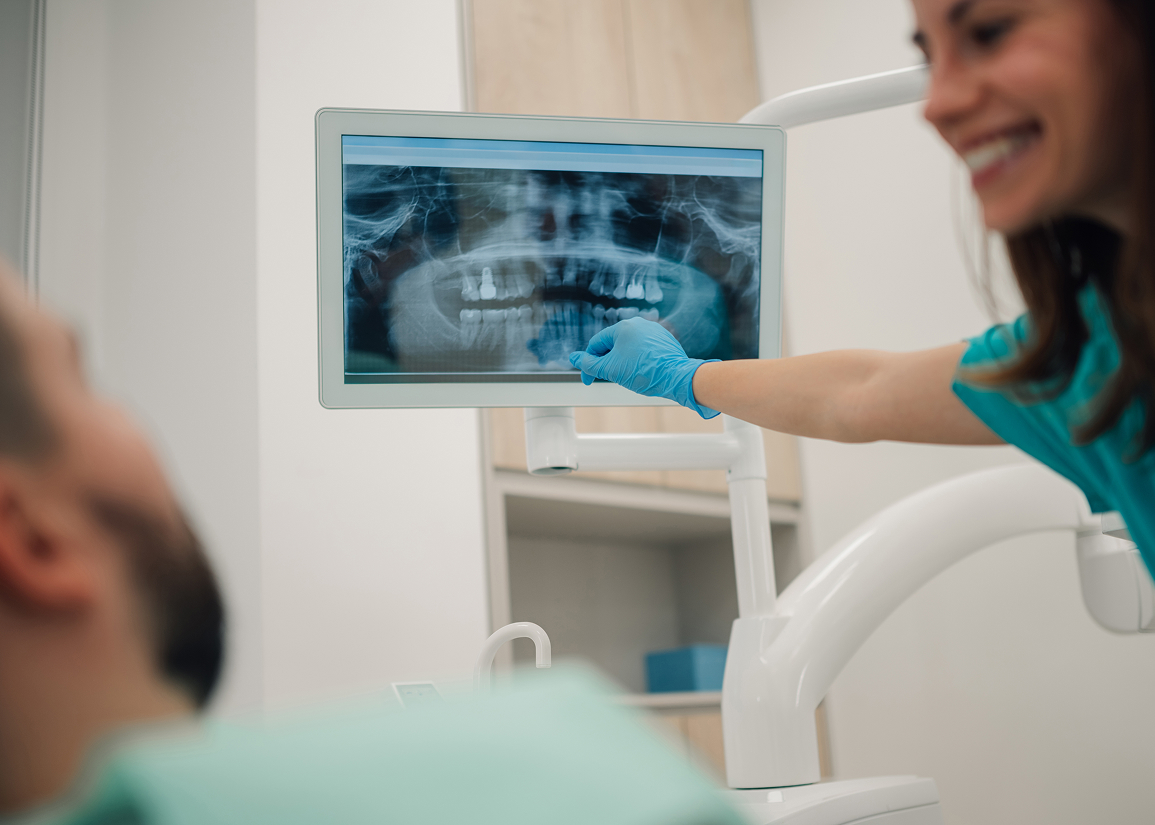
A standard dental x-ray is not enough to make this call. We take a 3D cone-beam scan, which shows the exact height and density of bone at the implant site, the position of the sinus floor, and the thickness of the sinus membrane. You will know which of the three situations below applies to you at the consultation, not partway through treatment.
Enough bone already — the implant goes in without grafting
Borderline — a smaller lift can often be done at the same appointment as the implant
Significantly reduced — the lift is done first, and the implant is placed after the graft has matured
The two techniques
When only a few millimetres of extra height are needed, a crestal lift works through the same small opening prepared for the implant itself. Specialized instruments gently raise the sinus floor from below, graft material is placed into the space created, and the implant often goes in during the same visit. It is the less invasive of the two — smaller access, less swelling, quicker recovery.
When more height is needed, a lateral window lift accesses the sinus through a small opening in the side of the upper jaw, above where the tooth used to sit. The sinus membrane is carefully lifted away from the bone floor, and graft material fills the space beneath it. This can create substantially more bone height, but requires a healing period before the implant can be placed.
Which technique you need is determined by the scan, not by preference.
What the appointment is like
The procedure is done under local anesthetic. Most patients are surprised that it feels closer to having a filling than to surgery — there is pressure and sound, but not pain. If dental work makes you anxious, we can discuss sedation options beforehand rather than on the day.
The appointment itself usually runs under an hour for a crestal lift, somewhat longer for a lateral window.
Recovery, and the rules that actually matter
Expect some swelling and mild discomfort for a few days, generally well managed with over-the-counter pain relief. Most people return to normal activity the following day. The instructions specific to sinus surgery are the ones worth taking seriously, because they protect the graft while it settles.
Do not blow your nose for the first two weeks — the pressure can disturb the graft
Sneeze with your mouth open, so pressure escapes rather than travelling into the sinus
No straws, no smoking — suction works against healing
Avoid heavy lifting and strenuous exercise for several days
Sleep with your head slightly elevated for the first few nights
How long before the implant goes in
If the lift was done at the same time as the implant, the timeline is the normal implant timeline. If the graft was placed on its own, it typically needs several months to mature into bone dense enough to hold an implant. Larger grafts take longer than smaller ones.
It is not a fast route, and we would rather be straight about that than have you discover it midway. What you get in exchange is a fixed tooth in a position that otherwise would not have supported one at all.
What affects the cost
The main variables are which technique is needed, how much graft material the site requires, whether one site or several are being treated, and whether the implant is placed at the same time or separately.
Because a sinus lift is almost always a step towards an implant rather than a treatment on its own, it makes most sense to look at the total treatment cost rather than the graft in isolation. We go through what drives that on our implant cost factors page, and Cherry financing is available if you would rather spread the cost.
Is it worth it?
The alternative to grafting an upper back site is usually a bridge, a partial denture, or leaving the gap. Each has consequences. A bridge means reducing the teeth either side. A denture does nothing to stop the bone loss continuing. An untreated gap lets the opposing tooth drift downward and the neighboring teeth tip inward, which changes your bite over time.
A sinus lift adds months to the plan. It also makes a fixed, independent tooth possible in a place where it otherwise would not be. For most patients replacing an upper molar, that trade is worth making.
If you are also wondering about grafting elsewhere in the jaw, our page on bone grafts for dental implants covers the wider picture.
Common Questions
Is a sinus lift painful?
The procedure is done under local anesthetic, so you should not feel pain during it. Afterwards, most patients describe pressure and mild soreness rather than sharp pain, usually managed with over-the-counter medication for a few days.
Will it affect my breathing or my sinuses long term?
No. The graft is placed beneath the sinus membrane, restoring bone that used to be there. It does not reduce the functional volume of the sinus in any way you would notice, and it does not cause ongoing sinus problems.
Can I have the implant on the same day?
Sometimes. If enough native bone remains to hold the implant steady while the graft matures, both can be done together. The 3D scan decides this, and we will tell you before treatment starts rather than during it.
What is the graft material?
Options include processed donor bone, bone of mineral origin, synthetic materials, or your own bone. Each is well documented and each acts as a scaffold that your body gradually replaces with its own bone. We will explain which we recommend for your case and why.
What if I have sinus problems already?
Chronic sinusitis or significant nasal obstruction needs to be assessed before grafting, and occasionally treated first. Tell us about any history of sinus trouble at the consultation — it changes the planning.
How successful are sinus lifts?
Sinus augmentation is one of the more predictable procedures in implant dentistry, with high success rates reported across decades of use. The most common complication is a small perforation of the sinus membrane during the lift, which is usually repaired during the same appointment.
Find out whether you need one
The only way to answer this properly is with a scan. One consultation tells you how much bone you have, whether a lift is needed, which technique applies, and what the whole treatment would involve from start to finish.Pure Arts Dental Care — 98-71 Queens Blvd, Rego Park, NY 11374, on the Forest Hills border. Call (718) 437-7777, Monday to Friday, 9am to 5pm.Related reading: our dental implant guide covers the procedure and costs, and our implant FAQs answer the questions patients ask most.

 Call Now